


Professor Spotlight Winter 2026: Dr. Matthew Wood
How did you decide to study environmental toxicology?
When I was a graduate student in biochemistry at UC San Diego, I often spent long hours running experiments on instruments that lacked computer interfaces—this was way before WiFi and smart phones—so I used that downtime to read scientific journal articles. I routinely read high-profile journals such as Science, Nature, and Cell to stay broadly informed about developments across the sciences. During this time, I encountered several papers by a National Institutes of Health investigator studying an emerging field she called “Environmental Gene Regulation.” I found the topic fascinating and immediately saw its relevance to my own work. At the same time, I became aware of research on Superfund cleanup sites, including a UCSD group that was developing modern molecular approaches to understand how environmental changes and pollution influence gene regulation in exposed organisms. These ideas profoundly shaped my scientific direction. My postdoctoral work at the NIH focused on Environmental Gene Regulation, where I investigated the biochemical mechanisms underlying these processes. After completing my postdoctoral research, I joined the Environmental Toxicology (ETX) department at UC Davis as a professor and continued pursuing this line of inquiry in my laboratory.
How have your past experiences prepared you for working at UC Davis/ Did you have any other jobs?
I began my career as an academic scientist during my fourth year as an undergraduate at UC Santa Cruz, where I became fascinated by how the biological activity of proteins and enzymes is regulated. I continued to pursue this line of inquiry throughout my graduate studies and postdoctoral fellowship. That training trajectory ultimately led me to UC Davis.
What about teaching at UC Davis do you love?
I love teaching. Throughout every stage of my academic training and career, I have sought out opportunities to teach—whether in the classroom, the laboratory, or through mentoring individual students. There is nothing more rewarding than witnessing the moment when a concept truly clicks for a student: the spark in their expression, the light-bulb moment when understanding takes shape, or the insightful question that emerges from something they have just learned. Those moments remind me why I entered academia and continue to motivate my work as an educator.
Besides being a professor, what are some outside hobbies that you enjoy right now?
I enjoy spending time with my family, walking my dog in the Arboretum, taking pictures of nature and staying active through a variety of sports. I love riding my bike around town and along the American River in Sacramento, and I also treasure opportunities to travel—whether exploring new places, experiencing different cultures, or simply taking in a change of scenery. I find that travel refreshes my perspective and fuels my curiosity in much the same way scientific work does.
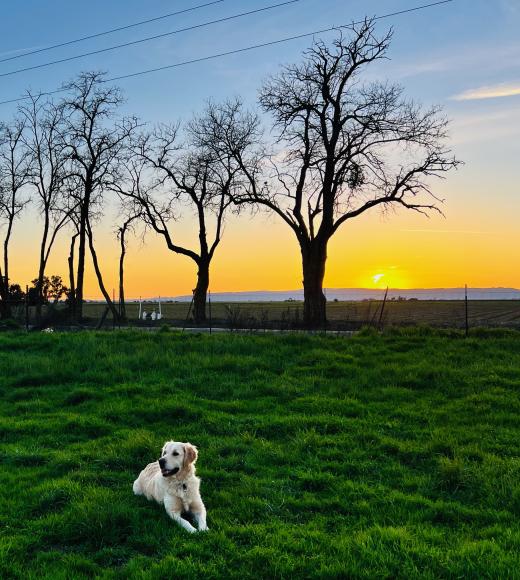
I also love cooking, especially preparing healthy, flavorful meals from scratch. In many ways, cooking reminds me of conducting experiments in the laboratory: combining ingredients with care, paying attention to technique, and taking satisfaction in creating something both nourishing and enjoyable.
What would students be surprised to find out about you?
Something surprising about me is that I didn’t begin my college career planning to become a scientist at all. I started as an undeclared major at UC Santa Cruz and played midfielder on the men’s collegiate soccer team—that was my main passion at the time. I didn’t become seriously engaged in science until my third year as an undergraduate, when I discovered how much I loved research and the process of scientific inquiry.
What is the best piece of advice anyone has given you?
One of the best pieces of advice I’ve ever received came from my dad: “Buy the ticket, take the ride.” For me, it means embracing a commitment fully—whether it’s school, a job, or a relationship—and seeing it through from beginning to end, even when the journey becomes challenging or unpredictable. That mindset deeply influenced my decision to go to graduate school, encouraging me to take the leap, trust the process, and fully commit to the path ahead.